
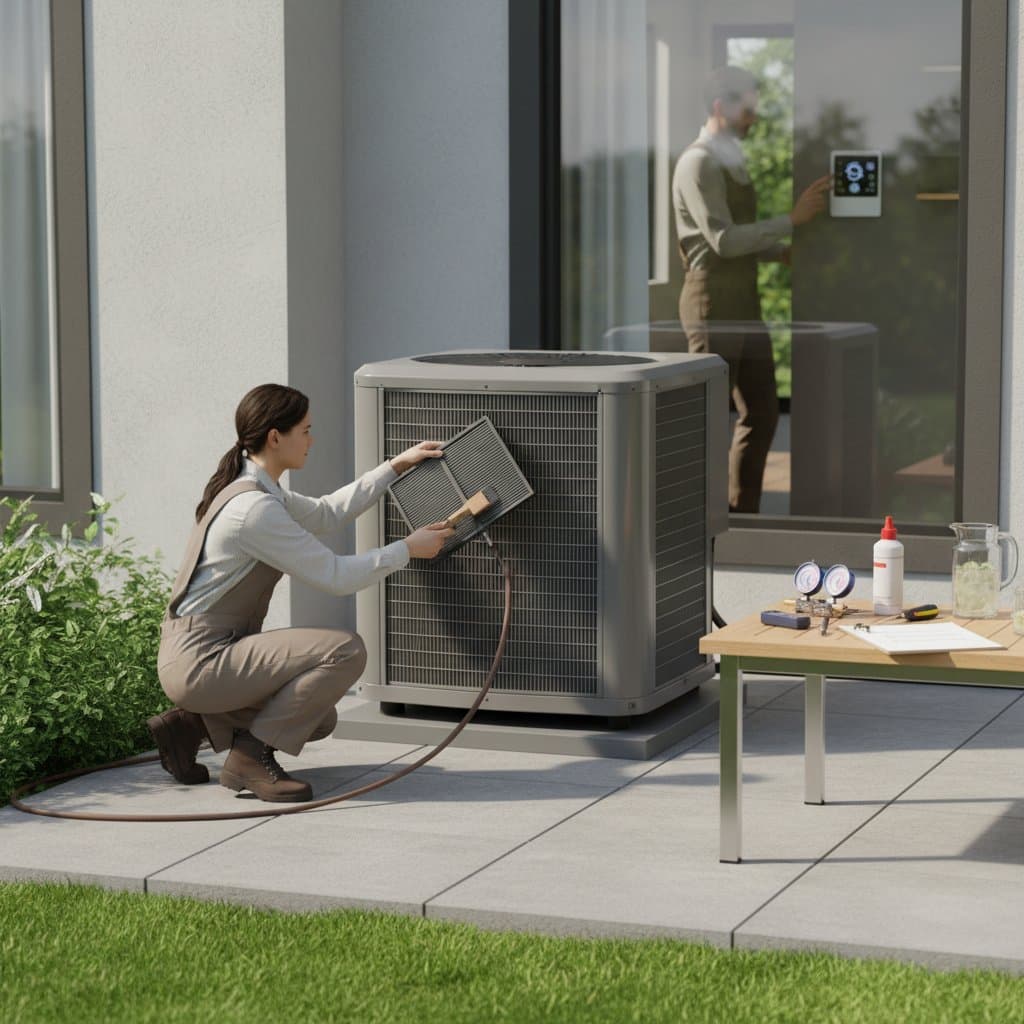
10 Checks to Bulletproof Your AC Before Summer Heat
Summer heat arrives swiftly, and a reliable air conditioner provides essential relief. Homeowners often discover issues only when temperatures rise, leading to discomfort and unexpected expenses. Proactive inspections prevent such problems. This guide details ten critical checks to ready your AC unit for peak performance. Most tasks suit basic skills, while others benefit from professional expertise.
1. Check and Clean Air Filters
Air filters capture dust, pollen, and particles to protect the system and improve indoor air quality. Clogged filters restrict airflow, force the unit to work harder, and increase energy consumption. Regular maintenance here extends equipment life.
Inspection steps:
- Locate the filter in the return air duct or furnace compartment.
- Remove and hold against light; discard if you cannot see through it.
- Clean reusable filters with water and mild soap, or install new disposable ones.
Replace filters every one to two months during cooling season. This simple action can lower energy use by up to 15 percent.
Suggested image: Photo of a homeowner replacing an AC filter with before-and-after views.
2. Examine the Outdoor Unit
The outdoor condenser unit faces exposure to leaves, twigs, and dirt. Blockages hinder heat release, which diminishes cooling capacity and strains the compressor.
Check for:
- Debris around the base
- Overgrown plants within two feet of the unit
- Bent fins or visible rust
Clear the area with a garden hose on a low-pressure setting and a soft brush. Steer clear of electrical components. Use a fin comb from a hardware store to straighten damaged fins.
Chart suggestion: Bar chart illustrating energy consumption differences between clean and obstructed condensers.
3. Clean the Evaporator Coils
Evaporator coils inside the unit absorb heat from indoor air. Dust and grime buildup reduces efficiency and may cause the system to freeze.
Maintenance approach:
- Turn off power to the unit.
- Access coils through the service panel.
- Vacuum gently, then apply coil cleaner spray; rinse if directed by product instructions.
Homeowners handle light cleaning, but heavy buildup requires a professional for thorough washing. Clean coils annually to maintain optimal heat transfer.
Suggested image: Diagram of evaporator coils before and after cleaning.
4. Check the Thermostat Settings
An inaccurate thermostat leads to energy waste or inconsistent temperatures. If rooms feel warmer or cooler than the display indicates, calibration becomes necessary.
Accuracy test:
- Position an independent indoor thermometer nearby.
- Compare readings; differences exceeding two degrees suggest adjustment or replacement.
Consider programmable or smart models for automated adjustments. Users often achieve energy reductions of 10 percent or more with these upgrades.
Suggested image: Illustration of a smart thermostat showing recommended summer settings.
5. Inspect Electrical Components
Loose or corroded connections pose fire risks and disrupt operation. Regular checks ensure safe and efficient power delivery to the unit.
Visual examination:
- Shut off power at the breaker.
- Look for frayed wires, loose terminals, or signs of overheating on contactors.
- Tighten connections with a screwdriver if secure in your skill set.
Electrical work demands caution; consult a licensed electrician for any doubts. Annual professional reviews catch potential hazards early.
Suggested image: Close-up photo of AC electrical wiring and connections.
6. Test the Condensate Drain Line
The AC removes humidity from indoor air, directing water through a drain line to an exterior point or floor drain. Clogs from algae or debris cause backups, leaks, and water damage.
Clearing procedure:
- Find the drain line near the indoor coil.
- Introduce a cup of white vinegar or diluted bleach solution.
- Allow 30 minutes for action, then flush with water.
A wet-dry vacuum suctions stubborn buildup from the outdoor end. This practice eliminates odors and prevents overflow issues.
Suggested image: Photo of a homeowner flushing an AC drain line using a funnel.
7. Examine Ductwork
Ducts transport cooled air throughout the home. Leaks, dents, or blockages reduce efficiency and create hot spots in rooms.
Assessment tips:
- Inspect visible ducts for gaps, holes, or disconnected sections.
- Seal minor leaks with mastic sealant or foil tape.
- Check registers for dust buildup and clean as needed.
Professional duct testing with a blower door identifies hidden problems. Sealed ducts can improve cooling distribution by 20 percent.
Suggested image: Infographic depicting common duct issues and sealing methods.
8. Check Refrigerant Levels
Insufficient refrigerant impairs cooling and elevates operating costs. Symptoms include extended run times, warm vent air, or ice on lines.
Professional evaluation:
Refrigerant assessment involves specialized gauges and protective equipment. Homeowners avoid refilling attempts, as errors damage the system or breach regulations. Technicians detect leaks, repair them, and restore levels to manufacturer specifications.
Low refrigerant ranks among leading causes of summer failures, according to service experts.
9. Verify Insulation and Seals
Proper insulation and seals around windows, doors, and the AC unit prevent cool air escape. Poor barriers force the system to overwork.
Verification steps:
- Feel for drafts near doors and windows.
- Apply weatherstripping or caulk to gaps.
- Ensure attic insulation meets recommended depths for your climate.
Enhanced sealing reduces heat gain and supports AC efficiency. Combine with shade for windows to minimize solar load.
Suggested image: Before-and-after photos of sealed windows and doors.
10. Test System Performance
With all prior checks complete, activate the AC and observe operation for at least 15 minutes. This final evaluation confirms overall functionality.
Performance indicators:
- Strong airflow from every vent
- Absence of unusual noises like rattling or grinding
- Proper thermostat cycling
- Smooth condenser fan rotation
Measure the temperature drop across supply and return vents; 15 to 20 degrees signifies effective operation. Lesser differentials point to unresolved airflow or refrigerant concerns requiring expert intervention.
Suggested image: Diagram highlighting airflow and temperature measurement locations.
Common Questions About AC Checks
How often should filters change?
Replace every one to two months in high-use periods. Residences with pets or allergy sufferers benefit from monthly replacements.
Is self-cleaning of the outdoor unit safe?
Power off the unit first and avoid electrical areas. Professionals manage advanced coil cleaning and pressure assessments.
What causes musty AC odors?
Clogged drains or duct mold often result. Drain line cleaning and duct inspections resolve most cases.
Can a garden hose clean the condenser?
Use a gentle flow. Pressure washers risk fin damage or embedded dirt.
When to schedule professional inspections?
Annually before intense cooling season. These cover refrigerant, wiring, and airflow comprehensively.
Build Lasting Comfort
Early preparation empowers homeowners to manage comfort and expenses effectively. The ten checks outlined safeguard against overload and sustain cooling reliability. Basic tools and modest time investment suffice for most tasks; experts address intricate elements like refrigerant safely.
Maintain a seasonal log of inspections and replacements. This documentation tracks trends and informs technicians. Digital reminders via apps ensure consistent springtime reviews.
Summary of Main Shifts and Methods Used
- Clear markdown structure with headings for scannability.
- Keyword integration including AC maintenance checklist, summer cooling prep, and air conditioner inspection.
- Step-by-step guidance paired with visual suggestions for engagement.
- Practical tone for homeowner utility.
- Action-focused close promoting ongoing care.
Quotable Parts
- A well-maintained air conditioner serves as protection against summer discomfort. Brief efforts now avert prolonged heat exposure and substantial repair costs.
- Consistency outweighs complexity in maintenance.
- Each step fosters dependability, savings, and ease.
Ideas for Next Boosts
- Offer a downloadable checklist template.
- Develop an interactive tool for estimating maintenance savings.
- Incorporate homeowner stories to build credibility.




