Understanding Sump Pump Warranties to Safeguard Your Home
A sump pump serves as a critical barrier against basement flooding, activating to remove excess water during heavy rainfall or groundwater surges. Homeowners invest in these systems to protect their foundations, valuables, and living spaces from water damage. However, the warranty accompanying a sump pump often determines whether repairs remain affordable or escalate into significant expenses. This article explores warranty fundamentals, common pitfalls, and strategies to maintain coverage, empowering you to make informed decisions.
Knowledge of warranty details prevents surprises during emergencies. By examining coverage types, exclusions, and maintenance practices, you gain tools to extend your pump's reliability and financial protection.
Types of Sump Pump Warranties Available
Sump pump warranties differ based on the provider, whether manufacturer, retailer, or installer. Familiarity with these categories aids in selecting the right option for your needs. Below are the primary types, each with distinct benefits and limitations.
-
Manufacturer Warranty
This standard coverage addresses defects in materials or manufacturing processes. For instance, if a faulty impeller causes the pump to malfunction within the warranty period, the manufacturer provides a replacement unit. Durations typically range from one to five years, with higher-end models offering longer terms. Review the specific terms to confirm what qualifies as a defect. -
Extended Warranty
Retailers or third-party services extend protection beyond the manufacturer's period, often including labor and expedited repairs. These plans prove valuable in areas prone to frequent storms, where pumps face heavy use. Coverage might encompass electrical components or even haul-away fees for old units. Expect to pay an additional fee upfront, but calculate potential savings from avoided out-of-pocket costs. -
Installation Warranty
Professional installers, such as plumbers or waterproofing specialists, offer guarantees on their workmanship. This protects against errors like improper sealing of the discharge pipe or inadequate pit depth, which could lead to failures. Periods vary from one to three years, focusing solely on installation-related issues rather than product defects. Always verify the installer's credentials to ensure reliable support.
Key Exclusions in Sump Pump Warranties
Warranties do not cover every scenario, and overlooking exclusions can void claims. Understanding these limitations helps you take preventive steps. Common exclusions include the following:
- Improper Installation or Modifications: Using unapproved parts or altering the system without guidance often results in denial of claims.
- Maintenance Neglect: Failure to clean the sump pit or test the float switch regularly leads to issues classified as wear and tear.
- External Damage Factors: Power outages, surges from lightning, or exposure to corrosive chemicals fall outside standard coverage.
- Capacity Overload: Selecting a pump too small for your home's water inflow means failures due to undersizing do not qualify.
- Environmental Hazards: Freezing temperatures that crack components or sediment buildup from poor site conditions remain the homeowner's responsibility.
To mitigate these risks, schedule annual inspections and retain all maintenance logs. These records demonstrate compliance during claim processes.
Case Study: The Impact of Warranty Preparedness
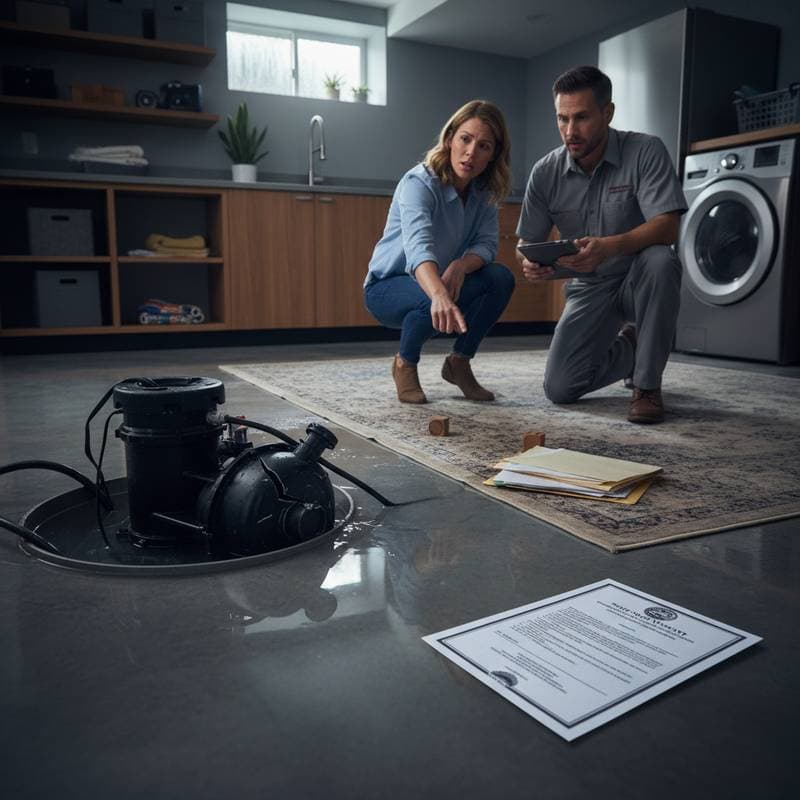
Consider a homeowner in a region with seasonal downpours. During an intense storm, their sump pump ceases operation due to a defective seal, a manufacturing flaw covered under a three-year warranty. The owner contacts the manufacturer, submits photos and purchase details, and receives a free replacement installed by a certified technician within 48 hours. Cleanup costs stay minimal, preserving their budget.
In contrast, another homeowner with an expired warranty faces a similar failure. They purchase a new pump for $300, hire an emergency plumber for $200, and spend $500 on water extraction services. The total exceeds $1,000, highlighting the value of active warranty management. Proactive steps, such as renewing coverage annually, bridge this gap.
Comparing Warranties: Factors to Evaluate
Selecting a warranty requires balancing cost, scope, and convenience. Start by listing your home's flood risk and pump usage patterns. Then, assess plans using these criteria:
- Duration and Scope: Longer terms with comprehensive parts and labor inclusion offer better value.
- Claim Accessibility: Opt for providers with straightforward online filing and local service networks.
- Cost Structure: Weigh initial premiums against potential repair savings; extended plans often break even after one claim.
- Transferability: If you plan to sell your home, choose transferable warranties to boost property appeal.
Create a comparison table to visualize options. For example:
| Brand/Model | Coverage Type | Duration | Parts/Labor Included | Annual Cost |
|---|---|---|---|---|
| Brand A | Manufacturer | 3 years | Parts only | Included |
| Brand B | Extended | 5 years | Full | $50 |
| Brand C | Installation | 2 years | Labor only | $100 |
This format clarifies trade-offs. Additionally, visualize savings with a bar graph depicting average repair expenses: $1,200 without warranty versus $150 with coverage. Alt text: Bar graph illustrating sump pump repair costs with and without warranty protection.
Insights from Professionals and Homeowners
Plumbing experts emphasize that warranties function best alongside routine care. Test your pump monthly by pouring water into the sump pit and observing activation. Install a battery backup to handle power failures, a common exclusion trigger. Waterproofing contractors note that combining warranties with smart monitoring devices, like water sensors, alerts you to issues early.
Homeowners on repair communities recount experiences where detailed documentation sped up claims. One user described a seamless replacement after a storm, crediting their organized service history. These anecdotes underscore the importance of vigilance in high-risk areas.
Steps to Secure and Maintain Your Warranty
Act now to fortify your sump pump protection. First, locate your current warranty documents and note the expiration date. If coverage lapses soon, contact the provider for renewal options that include enhanced services.
Next, implement a maintenance schedule: clean the pit quarterly, inspect seals biannually, and test the system before rainy seasons. Document each action with dates and photos for claim substantiation.
Finally, when purchasing a new pump, prioritize models from reputable brands with robust warranties. Consult local installers for tailored advice, ensuring your setup aligns with warranty requirements.
Benefits of Proactive Warranty Management
Effective warranty oversight transforms potential disasters into manageable events. Your basement remains dry, your finances secure, and your home's value intact. By investing time in understanding and upholding coverage, you build resilience against water threats. Review your setup today to ensure readiness for the next rain event.