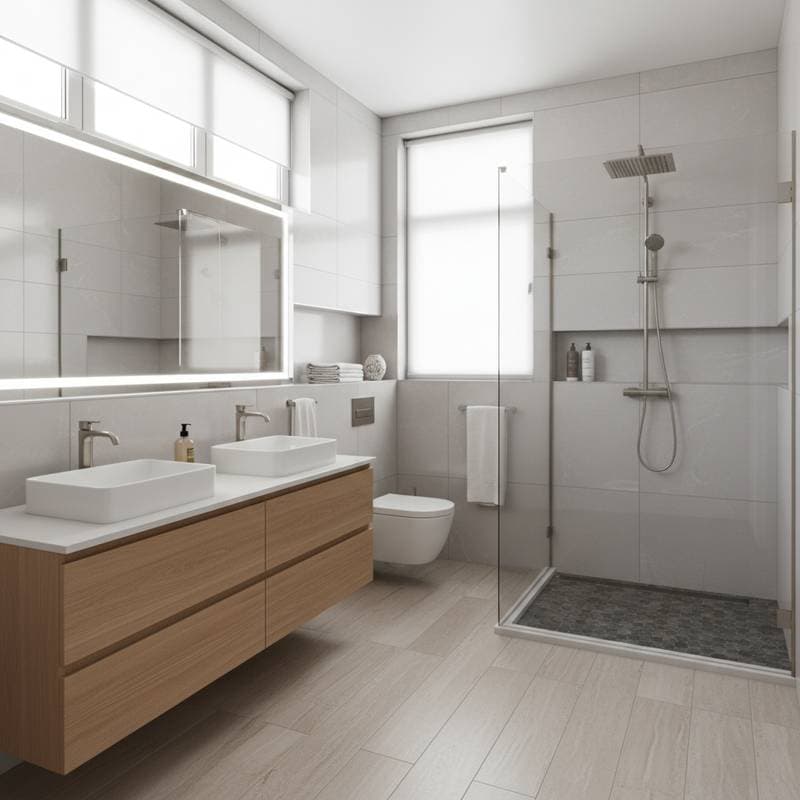
2025 Bathroom Remodel Costs: Top ROI Investments
A bathroom remodel enhances daily comfort and increases home value. Homeowners frequently select this project to improve routines and strengthen resale potential. Understanding cost factors and strategic spending ensures informed decisions from the planning stage through installation.
This guide examines elements influencing bathroom remodel expenses, strategies for achieving strong returns on investment via thoughtful design and selections, and features that attract prospective buyers most effectively.
High-ROI Bathroom Upgrades
Improvements vary in their potential returns. Certain finishes and elements captivate buyers through a blend of longevity, efficiency, and aesthetics. Direct investments toward updates that deliver these benefits to optimize outcomes.
1. Modern Showers and Bathtubs
Walk-in showers featuring frameless glass enclosures represent a solid choice. These designs impart a sleek, contemporary appearance and expand the perceived size of the area. Incorporate slip-resistant flooring alongside a rainfall showerhead to elevate user experience.
Freestanding tubs attract those seeking a retreat-like atmosphere. Opt for acrylic or cast stone materials to ensure enduring performance. In compact spaces, substituting a cumbersome tub with a streamlined shower frees up room and modernizes the layout.
Suggested image: A frameless glass shower with matte black fixtures. Alt text: Modern walk-in shower with glass enclosure and rainfall head.
2. Energy-Efficient Fixtures
Low-flow toilets and faucets reduce water usage without sacrificing performance. These selections align with buyer preferences for sustainable features and lower utility bills. Pair them with dual-flush mechanisms for added efficiency in high-traffic bathrooms.
Sensor-based faucets minimize waste further by activating only when needed. Installation proves straightforward in most setups, and the upfront cost recoups through long-term savings. Buyers view these as practical enhancements that reflect responsible ownership.
3. Updated Lighting and Mirrors
Lighting influences ambiance and functionality. Implement layered illumination using recessed ceiling fixtures, vanity sconces, and LED-integrated mirrors to achieve versatility and elegance.
LED options endure longer and consume less power compared to traditional bulbs. Mirrors equipped with defogging capabilities or touch-activated controls convey luxury at a modest expense. Position task lighting near vanities to highlight grooming areas effectively.
4. Durable Flooring and Surfaces
Large-format porcelain tiles offer a seamless, low-maintenance surface that resists moisture and wear. Select matte finishes to minimize slips and simplify cleaning routines. These choices endure daily use while contributing to a polished aesthetic.
Underfloor waterproofing membranes prevent future issues in humid environments. Combine with heated options for year-round comfort. Prospective buyers prioritize these elements for their practicality and visual impact.
5. Smart Storage Solutions
Integrated niches, floating vanities, and recessed shelving maintain organization and enhance spatial flow. Such solutions streamline routines and present a tidy appearance.
Floating vanities expand the illusion of space in smaller bathrooms and facilitate underfloor cleaning. Select cabinets with water-resistant laminates to withstand humidity. Customize storage heights to accommodate specific needs, such as taller shelves for linens.
6. Ventilation and Accessibility Features
High-efficiency exhaust fans with humidity sensors remove moisture promptly, preventing mold growth. Quiet operation models integrate seamlessly without disrupting serenity.
Grab bars and lever handles improve safety for all users, particularly in aging-in-place designs. Install these subtly to avoid an institutional feel. Buyers appreciate inclusive features that extend the home's usability over time.
7. Heated Floors and Towel Warmers
Radiant heating systems installed beneath tiles provide consistent warmth during cooler seasons. Electric mats distribute heat uniformly, eliminating cold spots.
Towel warmers introduce subtle indulgence at a reasonable setup cost. Hydronic versions connect to existing plumbing for efficiency. These additions shape positive impressions, even if their direct value contribution remains moderate.
Real-World ROI Data
Bathroom renovations consistently rank among top-value home improvements. Reports from industry sources indicate average returns ranging from 55 to 70 percent, influenced by location and execution quality.
Mid-range projects recover value more effectively than upscale versions. Practical updates appeal broadly, whereas extravagant elements like bespoke stone may not justify premiums. Emphasize enhancements that prioritize usability over excess customization.
Consider replacing outdated tiles with expansive porcelain formats and applying fresh white paint. This approach refreshes dated areas economically, avoiding the expense of complete overhauls. Track local market trends to align investments with buyer expectations.
Design Trends Affecting Future Value
Selections that harmonize current styles with enduring appeal sustain relevance. Balance innovation with timelessness to protect long-term worth.
Neutral Colors
Subtle whites, warm grays, and soft beiges form versatile backdrops. Introduce vibrancy via accessories like textiles or greenery rather than fixed surfaces.
These palettes adapt easily to personal tastes, broadening appeal. Test samples under various lighting to confirm harmony with adjacent rooms.
Natural Materials
Tiles mimicking stone, finishes resembling wood, and subdued metal accents infuse organic warmth. Such textures complement diverse architectural styles.
Source eco-friendly variants to appeal to environmentally conscious buyers. Maintenance remains simple, preserving the investment's integrity.
Minimalist Fixtures
Slender faucets, straightforward profiles, and borderless mirrors suit wide preferences. These reduce visual noise and ease upkeep.
Matte black or brushed nickel finishes add sophistication without overpowering. Ensure compatibility with existing plumbing to streamline retrofits.
Smart Tech Integration
Automated lighting responsive to movement, fans triggered by humidity, and app-controlled showers enhance convenience. These technologies promote efficiency while integrating discreetly.
Start with basic voice-activated elements if full automation overwhelms. Compatibility with home systems future-proofs the space against evolving standards.
Expert Insights and Social Proof
Discussions in remodeling communities reveal that meticulous planning yields significant savings. Participants frequently endorse mid-level materials that mimic premium quality.
Trade professionals emphasize skilled craftsmanship over opulent components for durability. One homeowner allocated funds conservatively to hardware yet prioritized expert tiling. The outcome achieved a high-end look with superior longevity, free from common issues like cracks or seepage.
Questions Homeowners Often Ask
How long does a remodel usually take?
Full renovations span several weeks based on scope. Minor modifications conclude in days. Request a detailed schedule from contractors prior to commitment.
What adds the most value?
Contemporary showers, water-saving fixtures, and contemporary illumination deliver peak returns. These visible changes register immediately with viewers.
Is DIY worth it?
Self-directed efforts cut labor expenses but demand expertise. Errors in piping or surfacing prove costly to remedy. Restrict independent tasks to surface work like painting if skills prove limited.
How can I minimize disruption?
Establish an interim bathing area when feasible. Procure supplies in advance to avert pauses. Maintain daily site clearance to manage particulates.
Steps to Launch Your Bathroom Remodel
A strategic bathroom renovation merges aesthetics, usability, and financial gain. Establish a defined budget and identify priority elements early. Allocate resources to prominent areas such as surfacing, illumination, and hardware that fulfill both form and function criteria.
Consult local professionals for tailored assessments. Document inspirations to guide selections. Monitor progress against timelines to ensure smooth execution and optimal results.