
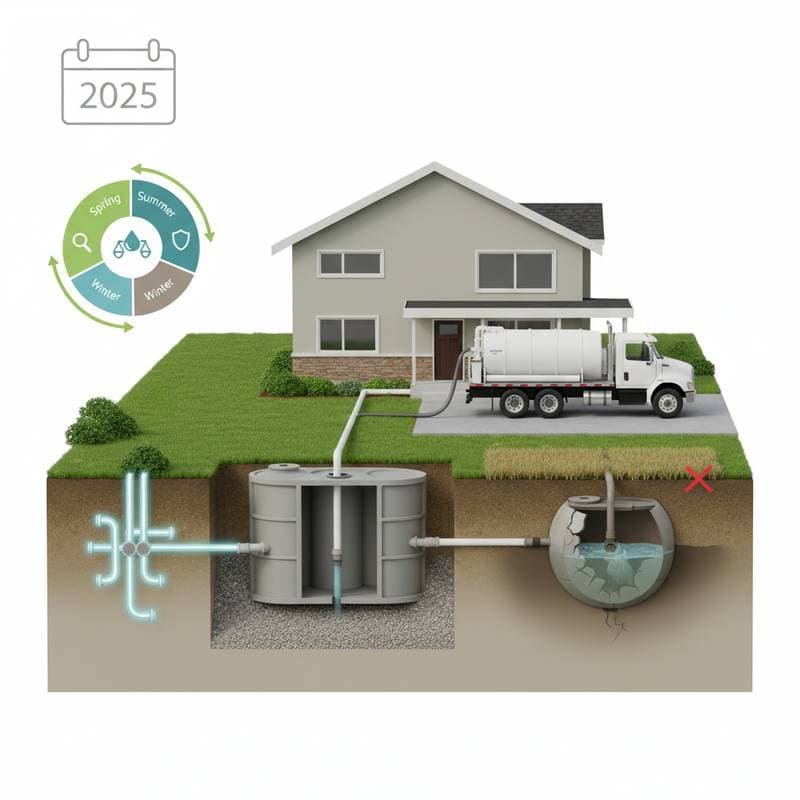
Why Regular Septic Pumping Prevents Costly Repairs
Homeowners with septic systems face unique challenges in maintaining sanitation and property value. Neglect can lead to backups, contamination, and extensive damage requiring thousands in repairs. Regular pumping stands as a fundamental practice that removes built-up solids, ensuring the system operates efficiently and averting major issues.
Septic tanks rely on natural processes to treat wastewater, but solids accumulate over time. Without intervention, these solids reduce capacity and force effluent into the drain field prematurely. This article outlines the rationale for routine pumping, provides a practical schedule, and highlights strategies for long-term protection.
How Septic Systems Function
A typical septic system consists of a tank that separates solids from liquids and a drain field that disperses treated water into the soil. Bacteria in the tank break down organic matter, but not all solids decompose fully. Over months or years, sludge and scum layers form at the bottom and top, respectively.
When the tank fills beyond 30 percent with solids, liquids cannot flow properly. This imbalance causes clogs, slow drains, or sewage surfacing in the yard. Professional pumping clears these layers, restoring balance and extending the system's lifespan, often beyond 20 years with proper care.
The Role of Regular Pumping in Prevention
Pumping serves as the cornerstone of septic maintenance by preventing solids from entering the drain field. Untreated buildup can clog pipes and soil pores, leading to system failure. Early intervention through pumping avoids these scenarios, which might otherwise necessitate full replacement costing 10,000 dollars or more.
Experts recommend pumping based on household size and usage rather than fixed intervals. For a family of four, this typically means every three to five years. Adhering to this practice reduces the risk of environmental hazards, such as groundwater pollution, and maintains compliance with local health regulations.
Determining Your Pumping Frequency
Assess your system's needs by considering daily water consumption. Households using over 500 gallons per day require more frequent service. Inspect the tank periodically to measure sludge depth; if it exceeds one-third of the tank's volume, schedule pumping immediately.
Factors like garbage disposals or laundry-heavy routines accelerate buildup. In such cases, opt for pumping every two years. Consult a licensed inspector for a tailored assessment, ensuring your schedule aligns with 2025 guidelines from environmental agencies.
Recognizing Early Warning Signs
Vigilance helps catch problems before they escalate. Watch for slow-draining sinks or toilets, which indicate partial blockages. Gurgling sounds in pipes suggest air trapped by rising solids.
Wet spots or lush grass over the drain field signal effluent overflow. Foul odors near the tank or in the home point to anaerobic conditions from overload. Addressing these promptly through pumping prevents further deterioration and protects indoor plumbing.
Common Indicators and Responses
- Persistent clogs: Pump the tank and inspect for structural issues.
- Sewage backups: Halt water use and call for emergency pumping.
- High nitrate levels in well water: Test soil and pump to reduce contamination risks.
Prompt action on these signs preserves system integrity and avoids health department fines.
Implementing a 2025 Maintenance Schedule
Structure your care around seasonal tasks to optimize performance. In spring, inspect for winter damage like cracked lids from frost heave. Pump if the previous service occurred over three years ago.
Summer demands attention to water conservation amid higher usage. Install low-flow fixtures to ease tank load. Fall preparation includes clearing leaves from the drain field to prevent root intrusion.
Winter focuses on insulation around pipes to avoid freezing. Schedule annual professional inspections regardless of pumping needs. This proactive approach ensures reliability through varying weather conditions.
Balancing Water Usage
Excess water flushes solids into the drain field prematurely. Spread laundry loads across the week and fix leaks swiftly. Avoid heavy water use during rainstorms, when soil saturation strains the system.
Educate household members on best practices, such as using liquid detergents only. These habits complement pumping, maintaining even distribution and reducing strain.
Long-Term Benefits of Consistent Care
Investing in regular pumping yields financial and environmental returns. Systems under routine maintenance last longer, deferring replacement costs. Home values remain stable, as buyers prefer properties with documented service histories.
Health benefits include reduced exposure to pathogens from leaks. Cleaner effluent supports local ecosystems by minimizing nutrient runoff into waterways. Overall, this discipline fosters peace of mind for homeowners.
Steps to Schedule Your Service
Locate certified septic professionals through state licensing boards. Request quotes detailing scope, including sludge measurement and tank cleaning. Book appointments well in advance, especially before peak seasons.
Keep records of all services for warranty purposes and resale documentation. Integrate pumping into your home calendar as a recurring event. By following these steps, you secure a dependable septic system for the future.




